Bracatinga Honeydew Honey by K&A Honey: Origins Benefits and Serving Ideas

Some honey tastes like wildflowers. Some tastes like citrus, herbs, or clover. Then there’s bracatinga honeydew honey, which feels more like a walk through a cool forest after rain. It’s darker, deeper, and a little more mysterious than the golden squeeze-bottle honey many of us grew up with.
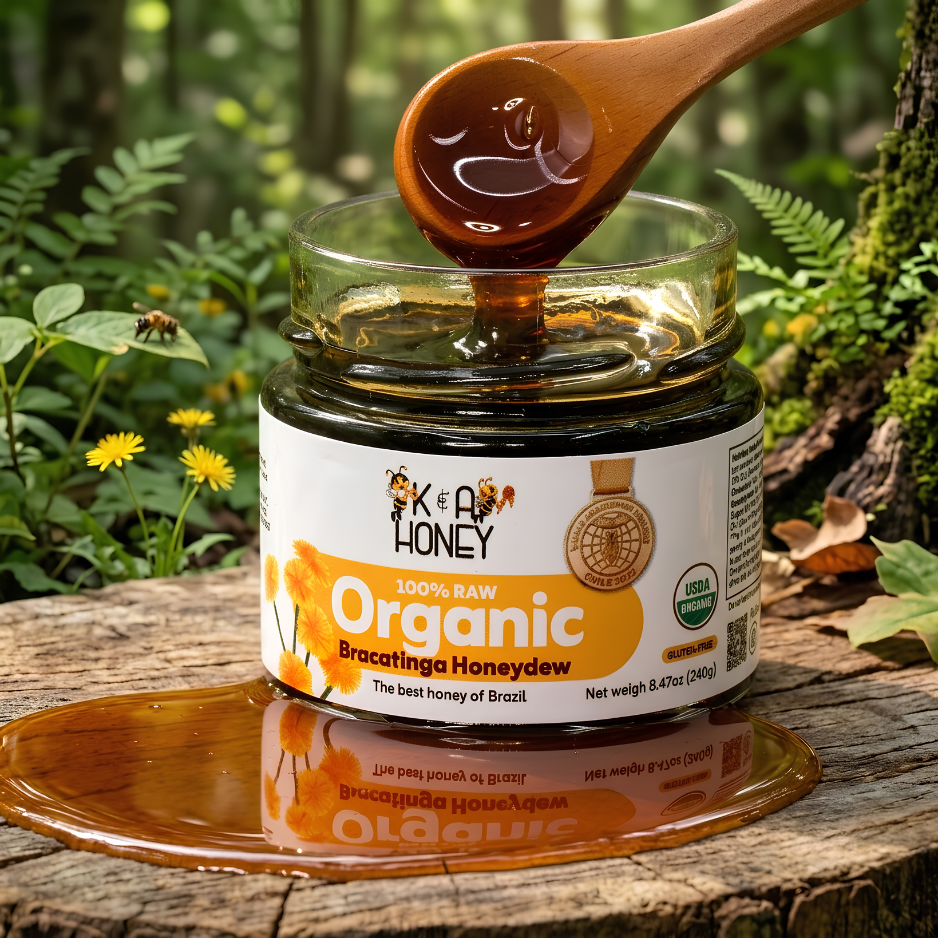
That’s what makes Bracatinga Honeydew Honey by K&A Honey so interesting. It doesn’t start with flower nectar in the usual way. It begins with the bracatinga tree, a native tree from southern Brazil, and a natural forest process that gives this honey its rich color and bold flavor.
If you like honey but want something with more character, this one is worth getting to know.

What makes bracatinga honeydew honey different
Most honey comes from nectar. Bees visit flowers, collect nectar, and bring it back to the hive. Bracatinga honeydew honey follows a different path.
It comes from honeydew, a sweet substance connected to tree sap. In the forests where bracatinga trees grow, tiny sap-feeding insects draw nutrients from the tree. They release honeydew on the bark and branches. Bees collect that honeydew, bring it to the hive, and turn it into honey.
That natural chain gives bracatinga honeydew honey a profile that stands apart from floral honey.
You’ll usually notice:
A darker amber to brown color
A richer, less floral aroma
Notes that can feel woody, malty, herbal, or lightly smoky
A smooth sweetness that doesn’t taste flat
A fuller body that works well in warm drinks and savory foods
The bracatinga tree itself, also known as Mimosa scabrella, is native to parts of southern Brazil. It grows in cooler highland regions and plays a role in local forest ecosystems. That background matters because honey reflects its place. Soil, climate, trees, insects, and bees all shape what ends up in the jar.
That’s why this honey feels so tied to origin. It’s not just “sweet.” It carries the character of a specific forest environment.
The origin story behind the jar
Bracatinga honeydew honey is closely linked to the forests of southern Brazil, especially areas where bracatinga trees grow naturally or in managed woodland systems. These trees are hardy and fast-growing, and they’re known for thriving in cooler, higher-elevation zones.
Here’s the simple version of how the honey happens:
Bracatinga trees produce sap.
Sap-feeding insects draw from the tree.
Honeydew appears on the tree surface.
Bees collect the honeydew.
The bees transform it inside the hive.
Beekeepers harvest the honey when it’s ready.
That’s a more unusual process than nectar-based honey production, and it’s one reason honeydew honeys are often prized by people who enjoy complex flavors.
The seasonal nature of bracatinga honeydew also adds to its appeal. This isn’t the kind of honey that can be produced anywhere at any time. It depends on the right trees, the right environmental conditions, healthy bees, and a careful harvest.
A good jar should feel like it came from somewhere real.
K&A Honey’s version gives this unusual honey a clear place on the table. It’s the kind of jar you reach for when plain sweetness won’t do the job. It can stand up to strong cheese, roasted vegetables, coffee, tea, toast, yogurt, and desserts that need a little depth.
Why people love it beyond the flavor
Let’s be honest, flavor is the main reason to try it. But there are a few other reasons bracatinga honeydew honey gets attention.
It has a bold and balanced sweetness
Some honey tastes sweet and then disappears. Bracatinga honeydew honey tends to linger. The sweetness is there, of course, but it has more structure behind it.
Think of flavors like:
Toasted malt
Damp wood after rain
Brown sugar
Dried fruit
Gentle herbal notes
A faint mineral finish
Not every jar will taste exactly the same, because honey is a natural food. That’s part of the fun. Still, the overall personality is usually darker and deeper than lighter floral honeys.
It may contain more minerals than many floral honeys
Honeydew honeys are often known for having a higher mineral content than many nectar-based honeys. That doesn’t turn honey into a supplement, and it shouldn’t be treated like medicine. But it does help explain the richer flavor and darker color.
Minerals and plant compounds can influence taste, color, and aroma. In darker honeys, you may also find more naturally occurring compounds that contribute to antioxidant activity. Research into honey suggests that darker varieties often show higher levels of these compounds, though the exact amount varies from jar to jar.
A fair way to say it is this: bracatinga honeydew honey is still honey, but it brings more depth than simple sweetness.
This post is for general food and wellness information only. Honey is not a medical treatment. Also, don’t give honey to children under 12 months old.
It feels special without being hard to use
Some specialty foods feel intimidating. This one doesn’t. You don’t need a complicated recipe or fancy tools. A spoon, a slice of toast, a cup of tea, or a bowl of yogurt is enough.
At the same time, it can make simple food feel more thoughtful. That’s the sweet spot.
How to taste bracatinga honeydew honey
Before mixing it into anything, taste it plain. That’s the easiest way to understand what makes it different.
Try this:
Put a small spoonful on a clean spoon.
Let it sit on your tongue for a few seconds.
Notice the first sweetness.
Wait for the deeper notes to show up.
Pay attention to the finish.
You may catch a gentle earthiness, a malty flavor, or a slightly resinous note. It’s not sharp or strange. It’s just more layered than mild honey.


Comments