The Fascinating Journey of Honeydew Honey from Araucaria Forests to Your Table

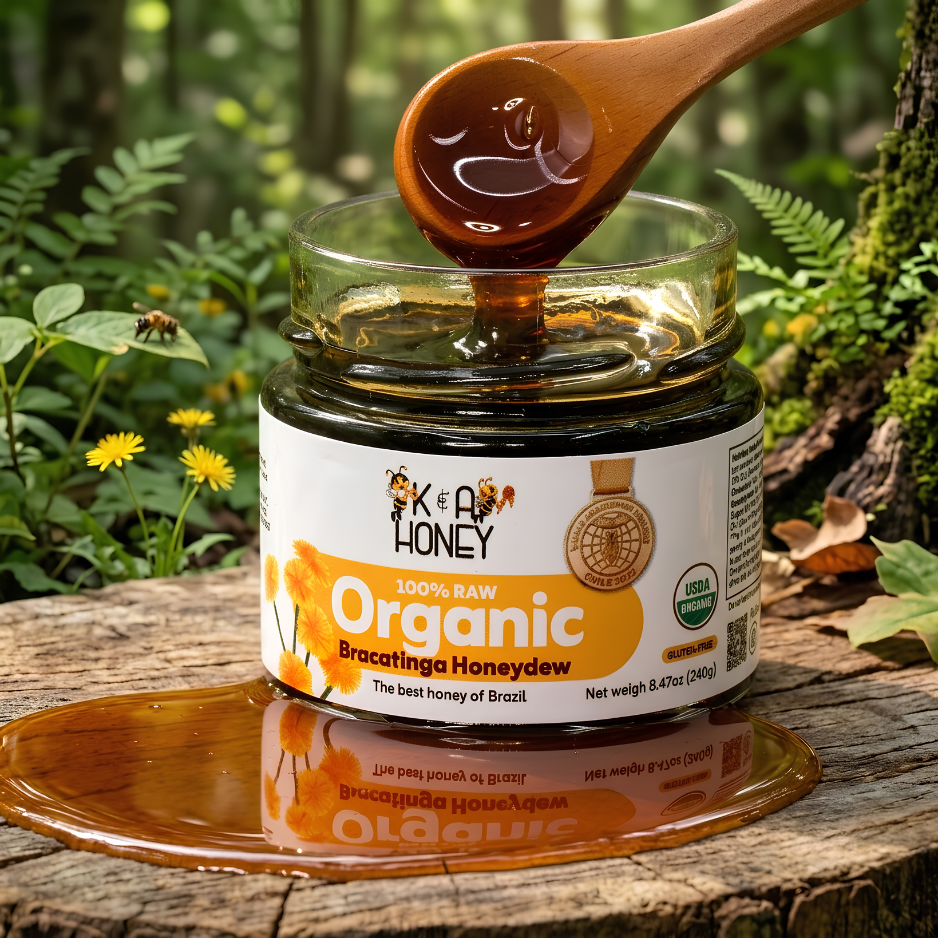
Honeydew honey is not your everyday sweetener. It carries a story deeply rooted in the misty Araucaria forests of Southern Brazil, where nature’s delicate balance creates a rare and eco-friendly treasure. This honey is a product of a unique relationship between the Bracatinga tree, scale insects, and honeybees. Understanding this connection reveals why honeydew honey is so exclusive and why it deserves a special place on your table.

The Unique Ecosystem of the Araucaria Forests
The Araucaria forests, located in Southern Brazil, are home to the Bracatinga tree (Mimosa scabrella). These forests are characterized by their cool, misty climate and rich biodiversity. The Bracatinga tree plays a vital role here, not only as a native species but as a host to a particular type of scale insect.
These scale insects feed on the sap of the Bracatinga tree and excrete a sugary substance called honeydew. This honeydew is the foundation for honeydew honey. Unlike nectar-based honey, honeydew honey comes from this sweet secretion, which honeybees collect and transform into honey.
The Symbiotic Relationship Behind Honeydew Honey
The production of honeydew honey depends on a fascinating symbiotic relationship involving three key players:
Bracatinga tree: Provides the sap that sustains the scale insects.
Scale insects: Feed on the sap and produce honeydew as a byproduct.
Honeybees: Collect the honeydew and convert it into honeydew honey.
This relationship is delicate and highly dependent on the natural lifecycle of the ecosystem. The scale insects appear seasonally, and their population fluctuates with the health of the Bracatinga trees and the forest environment. Honeybees rely on this honeydew as a food source during certain times of the year when floral nectar is scarce.
Because this process is so intertwined with nature, honeydew honey cannot be artificially produced or mass-harvested. It is a product of time, place, and ecological balance.
Why Honeydew Honey Is a Geographical Marvel
Honeydew honey from the Araucaria forests has earned recognition from the Slow Food Foundation’s Ark of Taste. This international catalog highlights foods that are culturally significant, endangered, or rare. The honey’s inclusion reflects its unique origin and the challenges of preserving its natural environment.
The honey’s flavor profile is distinct from typical floral honey. It tends to be darker, richer, and more complex, with subtle earthy and woody notes that echo the forest where it was born. This complexity makes it a prized ingredient for chefs and food lovers who seek authentic and sustainable products.
Sustainability and Exclusivity in Every Jar
Because honeydew honey depends entirely on the natural cycle of the Bracatinga tree and its scale insects, its availability is limited. This rarity adds to its value and supports sustainable harvesting practices. Beekeepers in Southern Brazil work closely with the forest ecosystem, ensuring that their methods do not disrupt the delicate balance.
Supporting honeydew honey means supporting biodiversity and the preservation of the Araucaria forests. It also means investing in a product that tells a story of exclusivity and respect for nature.
How Honeydew Honey Supports K&A’s Vision
K&A focuses on premium products that combine quality with sustainability. Honeydew honey fits perfectly into this vision. Its rarity and eco-friendly production justify its premium status, making it a worthy investment for consumers who care about the environment and unique flavors.
By choosing honeydew honey, customers contribute to the conservation of an endangered ecosystem and support local communities that depend on responsible harvesting. This connection between product and purpose strengthens K&A’s commitment to offering more than just food — it offers a story and a cause.
Bringing Honeydew Honey to Your Table
Enjoying honeydew honey is an experience that goes beyond taste. It invites you to appreciate the natural world and the intricate relationships that create such a rare product. Use it as a sweetener for tea, drizzle it over cheese, or add it to baked goods to enjoy its rich, complex flavor.
When you savor honeydew honey, you are tasting the misty Araucaria forests, the Bracatinga trees, and the tiny scale insects working together in harmony. It’s a reminder that some of the best things in life come from nature’s careful balance.


Comments